
What Does a Remodel Cost in Utah in 2026?
A Realistic Look at Kitchen, Bath and Whole-Home Pricing
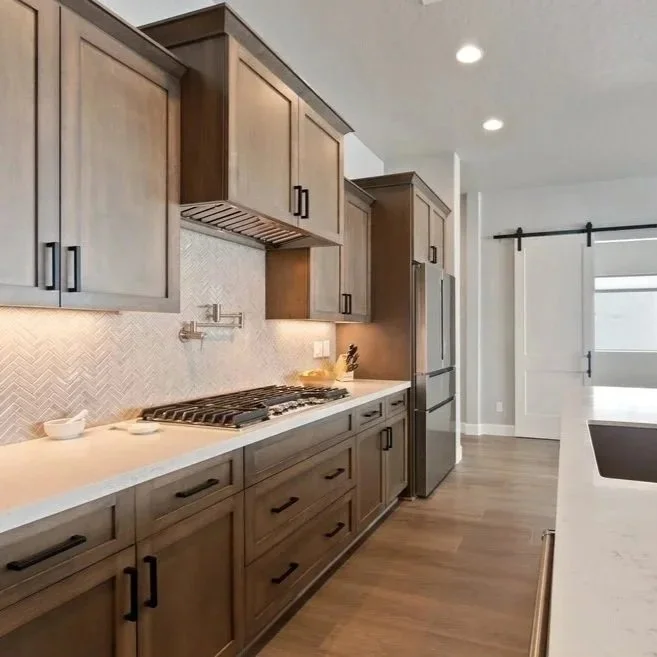

Kitchen Remodel Costs
The kitchen is usually the most expensive room in the house to remodel, simply because it packs in cabinets, countertops, appliances, plumbing, and electrical all in one space.
In the Northern Utah area, most kitchen remodels in 2026 fall somewhere between $25,000 and $125,000+, depending on scope. Here's roughly how that breaks down:
Cosmetic refresh — $10,000 to $25,000. Keeping the existing layout, refacing or repainting cabinets, new countertops, updated fixtures and hardware.
Mid-range remodel — $40,000 to $65,000. New cabinets, quartz countertops, mid-range appliances, and flooring, with little or no change to the footprint. For a typical 200-square-foot kitchen, this is where most full remodels land.
Upscale or full renovation — $65,000 to $125,000+. Custom cabinetry, premium materials, moved walls, relocated plumbing, and layout changes. High-end kitchens can climb well past this.
Cabinetry is almost always the single biggest line item, often 30 to 40 percent of the total, followed by countertops, appliances, and labor. Layout changes and structural work typically add 20 to 40 percent to the budget. Most kitchen remodels take 6 to 12 weeks from demolition to completion.
Bathroom Remodel Costs
Bathrooms are smaller, but don't let the square footage fool you. They're plumbing- and labor-intensive, with multiple trades overlapping in a compact space, so the cost per square foot is often higher than a kitchen.
In the Northern Utah area, full bathroom remodels in 2026 generally range from $8,000 to $75,000+. By scope:
Powder room or cosmetic update — $8,000 to $15,000. New vanity, fixtures, paint, and surface-level updates with no layout change.
Mid-range full remodel — $20,000 to $30,000. New tile, vanity, fixtures, and a tub or shower update, keeping the existing plumbing locations.
Primary bath or high-end renovation — $50,000 to $75,000+. Custom tile, walk-in showers, double vanities, heated floors, and relocated plumbing.
A budget under $10,000 generally supports a refresh, not a full remodel — an important distinction worth getting clear on early. Labor, plumbing, and tile work account for the largest share of the cost, and a full bathroom remodel typically takes 3 to 6 weeks.
Whole-Home Remodel Costs
A whole-home remodel is the hardest to pin to a number, because "whole-home" can mean anything from a cosmetic refresh to a down-to-the-studs rebuild.
Most homeowners spend $40,000 to $80,000 on a major remodel, while broader whole-home projects range from roughly $60,000 to $250,000+ depending on scope. As a per-square-foot rule of thumb:
$55 to $85 per square foot — cosmetic updates: paint, flooring, fixtures, and finishes throughout.
$85 to $200 per square foot — a mid-range remodel touching kitchens, baths, and updated systems.
$200 to $500+ per square foot — a full or luxury renovation with layout changes, structural work, or a gut to the studs.
Labor alone usually accounts for 50 to 60 percent of the total. Many homeowners choose to phase a whole-home remodel over one to three years, kitchen first, then bathrooms, then basement or additions, to manage cash flow.
Big Ticket Decisions that Move the Needle
If those ranges feel broad, here's the part that explains why. A handful of choices do most of the work in deciding where your project lands, and these are the decisions worth slowing down on. The same room, same footprint, can cost half as much or twice as much depending on how these go.
Cabinets. In a kitchen, this is the single biggest swing. Stock cabinets might run $4,000–$10,000; semi-custom $12,000–$25,000; and full custom $25,000–$60,000 or more. Door style, wood species, and storage upgrades all move the number. Refacing existing boxes instead of replacing them is one of the most effective ways to control cost.
Countertops. Material choice matters more than square footage here. Laminate, butcher block, entry-level granite, quartz, and high-end natural stone like marble or quartzite span an enormous range. Quartz remains the most popular mid-range choice because it balances durability and price, but the same kitchen can swing several thousand dollars on this one decision.
Tile and tile labor. This is the one homeowners underestimate most. The tile itself is rarely the expensive part, the labor to install it is. Intricate patterns, large-format tile, herringbone layouts, niches, and full-height shower walls all add days of skilled labor. A simple subway-tile surround and a custom mosaic feature wall can differ by thousands, even though both are "just tile."
Layout and plumbing changes. Keeping sinks, toilets, showers, and walls where they are is dramatically cheaper than moving them. Relocating a shower drain or toilet can mean cutting into the subfloor or slab, often $1,500 or more for a single fixture, before any finishes. If your existing layout works, leaving it alone is the biggest money-saver available.
Appliances and fixtures. A builder-grade appliance package versus a professional-grade one is easily a five-figure difference in a kitchen. The same is true of plumbing fixtures, lighting, and hardware in a bath, small individual items that add up quickly.
Flooring. Material and the amount of subfloor prep both factor in. Running new flooring throughout a whole-home project is a meaningful line item on its own.
The pattern across all of these: the structural decisions (layout, plumbing) protect or blow your budget, and the finish decisions (counters, tile, appliances) are where you have the most control. Knowing which tier you're shopping for, before you collect bids, keeps you from comparing a cosmetic quote against a full-remodel quote and making the wrong call.
How to Use These Numbers
These figures are meant to help you walk into the planning process with realistic expectations, not sticker shock halfway through. The single most useful thing you can do is decide on a comfortable budget range before you fall in love with finishes, so the project can be designed to fit you from the start. It’s also smart to set aside a contingency of 15 to 20 percent above your estimate. Most remodels uncover at least one surprise behind the walls, outdated wiring, plumbing that’s not up to code, or water damage, and older homes tend to hide more of them.
The only way to get a real number for your project is a detailed estimate based on your actual space, your goals, and current local pricing. That's exactly what we do, and we're happy to walk you through it.